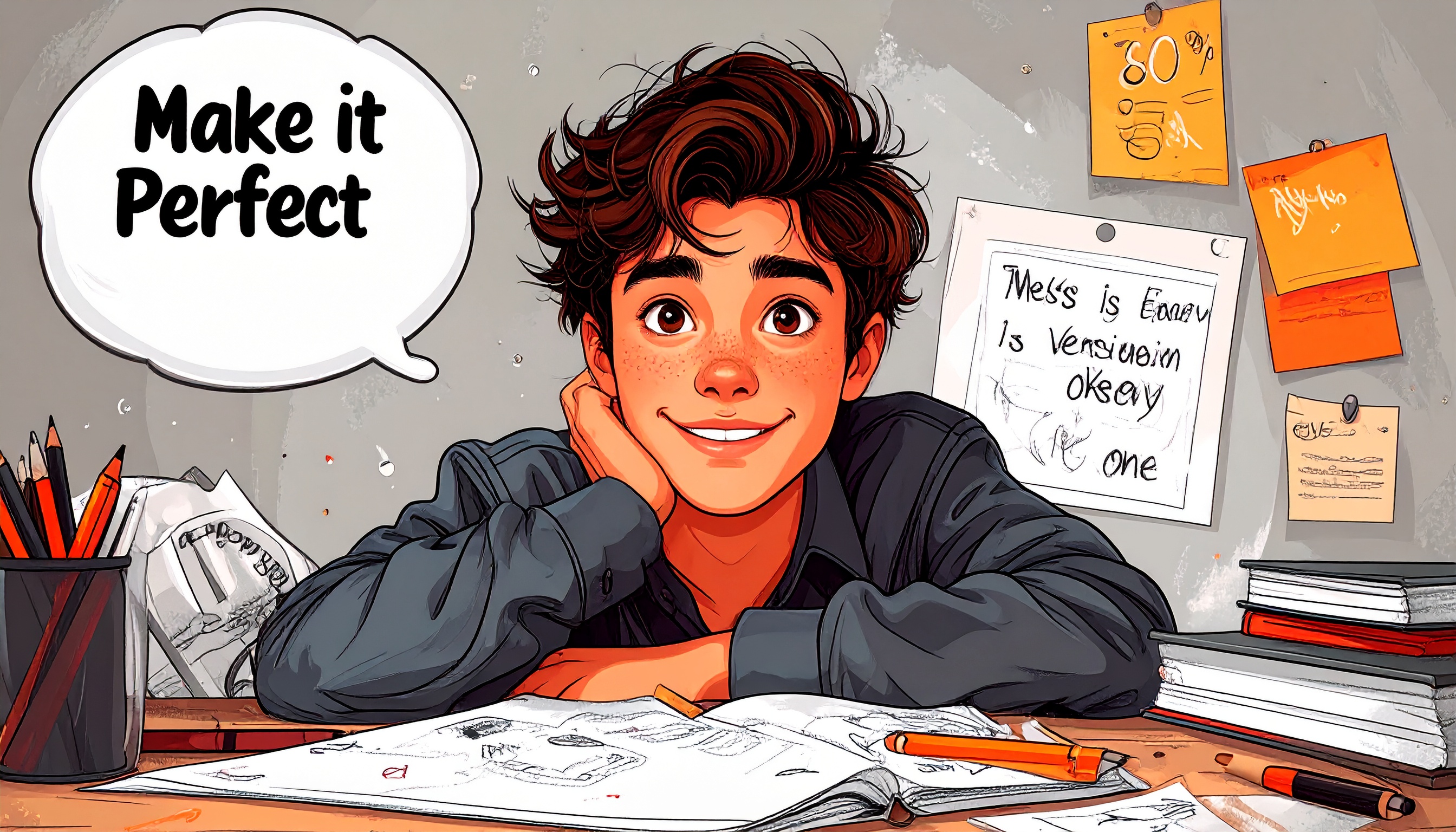
Flat-style cartoon of a person with ADHD surrounded by scattered sketches, messy notes, and unfinished projects. They look frozen at first, overwhelmed by a blinking “Make it perfect” thought bubble. In the next frame (or beside them), they’ve posted something messy but are smiling in relief. Around them are soft affirmations like “80% is enough,” “Messy is okay,” and “This is version one.” Use playful, hopeful colours and a validating tone.

🎯 ADHD & Perfectionism: How to Let Go (A Bit)

You’ve got 47 tabs open, 12 tasks half-started, and one project you haven’t touched in three months—because if it can’t be perfect, what’s the point?

Welcome to ADHD perfectionism: a weird fusion of high standards, fear of failure, and the haunting feeling that everyone else is somehow doing it better.

This isn’t just a mindset. It’s a nervous system pattern. Let’s look at what’s really going on—and how to shift it just enough to breathe.

Continue reading
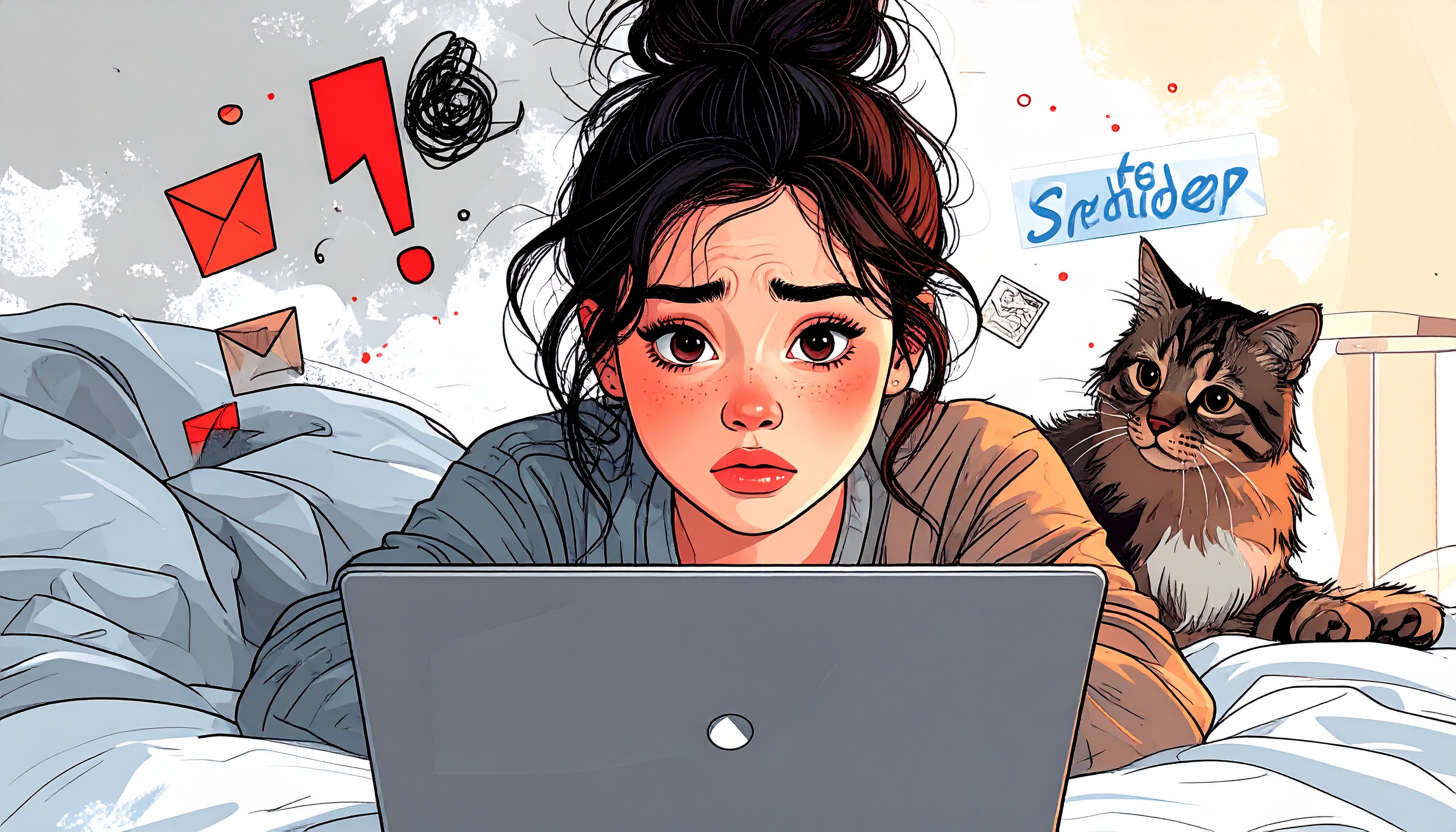

a person with ADHD staring at an email on their laptop, visibly overwhelmed—cheeks flushed, eyebrows raised in panic. Floating around them are exaggerated symbols of spiralling thoughts (e.g., thunderclouds, red exclamation marks, tiny rejection notes). A pet or friend in the background holds a “Safe Decoder” phone, showing emotional support. Use warm colours with emotional expression, not distress.

😭 Why You Cry at Emails: Emotional Regulation for ADHD

One email. Just a few words. And suddenly your whole body tightens, your face burns, and you’re on the verge of tears.

You’re not dramatic. You’re emotionally dysregulated—and you’re not alone.

For ADHD brains, emotional reactions often hit faster, harder, and louder than seems “logical.” Especially when the trigger is vague, abrupt, or even well-meaning.

This post isn’t just about inbox meltdowns. It’s about why small things feel big—and what’s actually happening behind the flood.

Continue reading
a person with ADHD standing in a world of exaggerated rejection symbols—crumpled letters, missed text messages, and stormy thought bubbles of self-doubt and fear. The person looks overwhelmed, standing under a dark cloud of rejection sensitivity (RSD), while soft light filters in from the side, showing a hint of hope and self-compassion. The scene is filled with dramatic contrast between emotional overwhelm and the possibility of release.

💔 ADHD & RSD: Why Rejection Feels Like the End of the World

Ever felt completely crushed by a small comment?
Like someone said “hey can we talk” and your brain went:

🚨 They’re mad. I messed up. I’m terrible. 🚨

Welcome to the wonderful world of RSD—Rejection Sensitive Dysphoria.

It’s real, it’s intense, and if you’ve got ADHD, chances are it’s been riding shotgun your whole life.

Continue reading