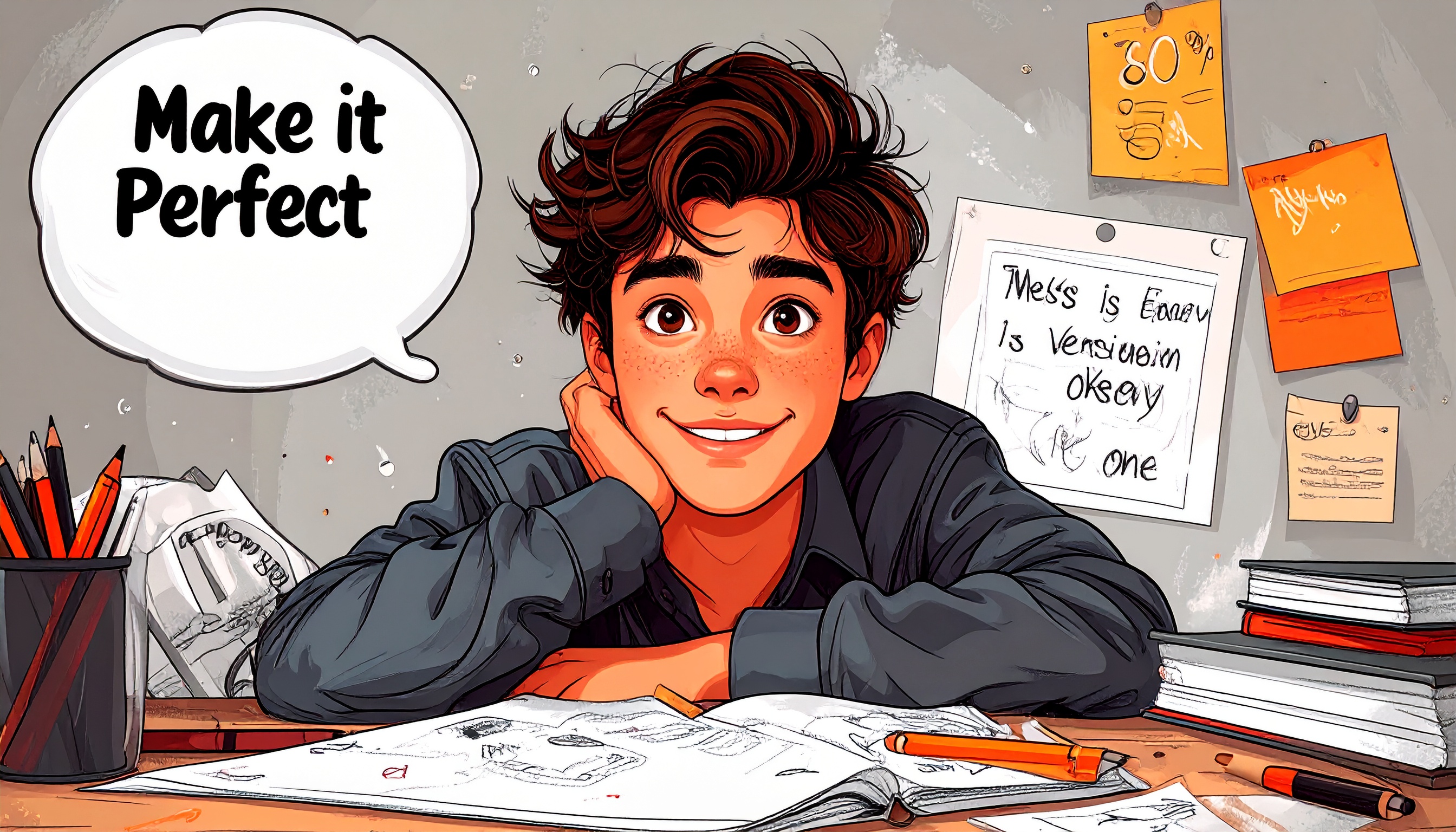
Flat-style cartoon of a person with ADHD surrounded by scattered sketches, messy notes, and unfinished projects. They look frozen at first, overwhelmed by a blinking “Make it perfect” thought bubble. In the next frame (or beside them), they’ve posted something messy but are smiling in relief. Around them are soft affirmations like “80% is enough,” “Messy is okay,” and “This is version one.” Use playful, hopeful colours and a validating tone.

🎯 ADHD & Perfectionism: How to Let Go (A Bit)

You’ve got 47 tabs open, 12 tasks half-started, and one project you haven’t touched in three months—because if it can’t be perfect, what’s the point?

Welcome to ADHD perfectionism: a weird fusion of high standards, fear of failure, and the haunting feeling that everyone else is somehow doing it better.

This isn’t just a mindset. It’s a nervous system pattern. Let’s look at what’s really going on—and how to shift it just enough to breathe.

Continue reading

a person with ADHD hesitating in front of a request (speech bubble from someone saying “Can you help?”). Their internal world is visualised behind them: a spiral of guilt, fear, and rejection sensitivity on one side, and calm affirmations like “I’m protecting my energy” on the other. They’re gently putting a hand on their chest with a thoughtful, slightly anxious expression. Soft, warm tones with psychological depth.

❌ How to Say No Without Spiralling

You want to say no. You know you should say no. But your brain panics, your body goes cold, and somehow you’re nodding yes while screaming internally. 🧠🔥

Sound familiar? That’s not just poor boundaries. That’s rejection sensitivity, fawning, and a tangled mess of emotional conditioning.

This post dives deep into the psychology of why saying no feels so hard with ADHD—and how to do it without guilt, panic, or a post-refusal shame spiral.

Continue reading