a person with ADHD curled up on the floor or couch, wrapped in a blanket, surrounded by signs of burnout: scattered to-do lists, unread messages, half-finished tasks. Their eyes are open, but tired—more foggy than sad. Around them are gentle symbols of support: a cup of tea, a phone showing a supportive text, a tiny plant, and sunlight peeking through a window. The mood is quiet, soft, and validating—burnout, not laziness.

🔥 ADHD & Burnout: Signs You’re Not Just Tired

You’re exhausted, unmotivated, emotionally fried—and yet, you keep asking yourself: am I just being lazy?

Spoiler: probably not.

ADHD burnout is very real—and very misunderstood. It doesn’t always look like lying in bed for days (though it can). Sometimes it looks like becoming hyper-productive in panic mode, then crashing. Or feeling like your brain is full of glue, even after a full night’s sleep.

Let’s go beyond the obvious signs and uncover the sneaky ways ADHD burnout shows up—especially the ones nobody talks about. 😮‍💨

Continue reading
a slightly frazzled but smiling person with ADHD, holding a sticky note with “Top 3” tasks while standing in front of a neat desk and chaotic background (piles of laundry, open tabs, coffee cups). Their outfit is tidy but a little mismatched. The vibe is “I’m holding it together… kinda.” Use soft colours, playful mood, and warm lighting.

🎭 How to Look Organised When You’re Not

You walk into work with yesterday’s to-do list, dry shampooed hair, and exactly one clean sock—but somehow, people think you’ve got it together.

Welcome to the neurodivergent magic trick: looking organised while quietly running on chaos and caffeine. ☕🌀

Whether it’s masking, coping, or sheer survival, ADHDers often learn to appear on top of things even when their brain is a spaghetti tangle of tabs, timers, and forgotten laundry.

So let’s break it down—how to fake functional (with integrity), reduce actual stress, and give your brain enough structure to keep the illusion from crumbling. 🎩

Continue reading
a neurodivergent person sitting at a desk with multiple open apps on a laptop and phone. Around them float icons for tasks, focus timers, and trees (Forest app), with gentle lighting and a hopeful vibe. The character looks engaged but not overwhelmed. Soft, pastel ADHD-friendly palette.

📱 10 ADHD-Friendly Apps That Actually Help

Let’s be real: most productivity apps feel like they were designed by robots for other robots. 🤖

If you have ADHD, the last thing you need is an app that gives you 27 notifications and a colour-coded guilt trip.

You need tools that are visual, forgiving, and easy to use—even when your brain isn’t braining. 🧠⚡

Here are 10 ADHD-friendly apps that actually make a difference—and yes, we tested them like chaotic little scientists. 🧪

Continue reading
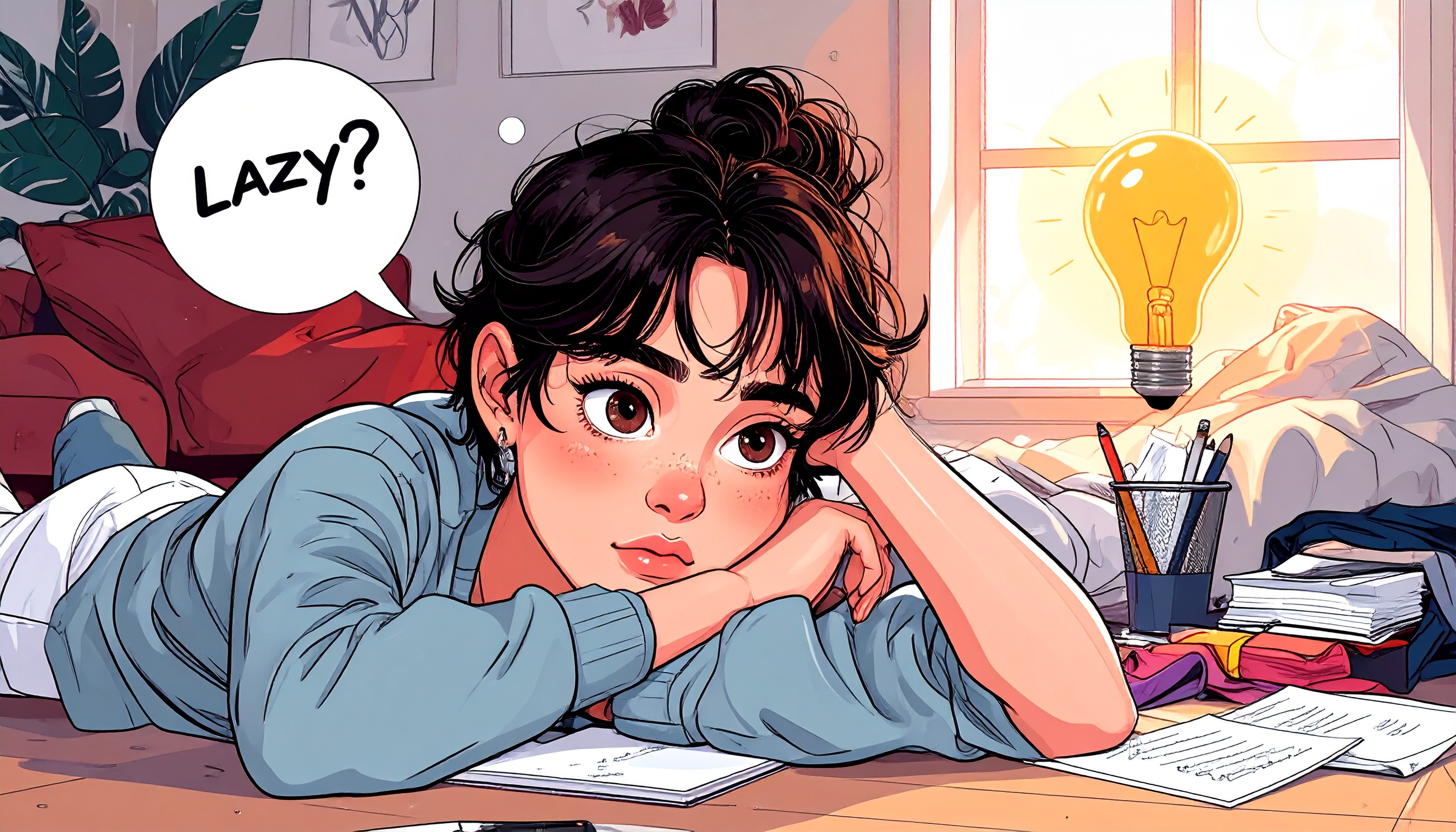
a person slumped on the floor in comfy clothes, surrounded by a messy room and a looming to-do list. Their eyes show overwhelm, not apathy. Floating above them are symbols of shame (e.g., a speech bubble saying “lazy?”) and a lightbulb gently glowing next to their head, symbolising misunderstood executive dysfunction. The overall tone is soft, emotional, and validating—with warm, neurodivergent-friendly colours.

🛑 ADHD vs Laziness: Let’s Set the Record Straight

You’re staring at your to-do list. You want to do the thing. But your body won’t move.
Meanwhile, your inner critic is yelling: “You’re just lazy.”

Sound familiar?

Let’s get one thing clear: ADHD and laziness are not the same thing. And confusing the two is harmful, outdated, and just plain wrong. ❌

This post is your no-shame breakdown of what’s really going on—and how to respond when your brain (or someone else) calls you lazy.

Continue reading
a sleepy, neurodivergent adult wrapped in a blanket, sipping something warm with messy hair and one sock missing. Around them are gentle morning cues: a plant, a morning playlist on a phone, sunlight peeking through a window, and a to-do list with only one task checked off. The mood is soft, cosy, and non-judgemental—designed to reflect a slow, ADHD-friendly start.

☀️ ADHD Morning Routines That Don’t Feel Like Torture

Mornings: when the alarm goes off, your brain hits snooze, and chaos rolls in like a parade of unfinished thoughts and mismatched socks. 😵

If mornings feel more like a panic sprint than a peaceful reset, you’re not alone.

ADHD brains don’t naturally wake up, focus, and function in neat little checklists. But that doesn’t mean you can’t create a morning rhythm that works with your brain, not against it. 🌅

Let’s ditch the 5am ice baths and 27-step routines and build something ADHD-friendly—and actually sustainable.

Continue reading
neurodivergent adult holding a piggy bank in one hand and an open shopping app in the other, looking torn between saving and spending. Background shows a split scene: one side with fun purchases (boxes, gadgets, snacks), the other with budgeting visuals like charts, savings jars, and a “fun money” category highlighted. Use warm, ADHD-friendly colours and a gentle, humorous tone.

💸 How to Budget When Your Impulses Run the Show

You swore you’d save money. Then your brain screamed “treat yourself!”—and suddenly there’s a shiny new gadget or 17 boxes from impulse-fuelled online shopping. 😅

If you’ve got ADHD, budgeting isn’t just about spreadsheets—it’s a battle between intentions and urges.

Let’s ditch the shame and talk about ADHD-friendly ways to budget that actually work with your brain, not against it. 🧠💸

Continue reading
two people sitting across from each other—one visibly distracted or nervously talking, the other listening with a patient, kind expression. A speech bubble floats between them, filled with mismatched icons like lightning bolts, spirals, hearts, and question marks, symbolising ADHD communication chaos. Include soft, ADHD-friendly colours, gentle lighting, and a warm, understanding vibe. Optional detail: a tiny frog emoji card on the table as a “pause word.”

💬 ADHD & Relationships: Communication Without Chaos

You said something the wrong way. Or forgot to say it at all.
Now there’s a weird silence, a spiralling thought loop, and maybe a pinch of “Why am I like this?!”

Welcome to the beautiful mess of relationships with ADHD. 🧠❤️

Whether you’re the one with ADHD or loving someone who is, communication can feel like decoding a radio signal in a thunderstorm.

But here’s the good news: it doesn’t have to stay that way. 💡

Let’s talk about how ADHD affects the way we connect—and how to build stronger, calmer, more honest conversations without needing a total personality overhaul.

Continue reading
cheerful, slightly frazzled neurodivergent female in a cosy room. Half the room is visibly messy (laundry piles, books, scattered objects), while the other half is sparkling clean and tidy. A small sign near the door says “Wander Pile 🧺.” The character is smiling in satisfaction, holding a sponge or dust cloth, with visual contrast between chaos and calm. Soft pastel colours, ADHD-friendly, warm and hopeful atmosphere.

🧽 Cleaning with ADHD: The One-Room Rule

Cleaning your entire home sounds great until your brain actually tries to do it.
Suddenly you’re knee-deep in three half-started piles, surrounded by open drawers, a random sock on the hallway floor, and no clue what you were doing in the kitchen.

Welcome to ADHD cleaning chaos. 🌀

Here’s the truth: your brain doesn’t struggle because you’re lazy. It struggles because too many steps, decisions, and open loops flood your mental bandwidth.

The fix? The One-Room Rule.

This ultra-simple approach is ADHD-friendly, low-pressure, and genuinely effective. Let’s break it down. 🧽✨

Continue reading
Cartoon of a person with ADHD sitting at a cluttered desk, surrounded by negative symbols of the ADHD shame spiral (guilt, self-doubt, failure). The image shows emotional overwhelm but also includes a calming background element.

😔 ADHD & The Shame Spiral: How to Break It

You forgot to reply to that message. You left the laundry in the washer. Again.
And now your brain is screaming: Why can’t I just be normal?!

Sound familiar? That, my friend, is the shame spiral in full swing. 💫

For ADHDers, this cycle can feel never-ending. One slip-up leads to guilt ➡️ which leads to self-doubt ➡️ which leads to executive dysfunction ➡️ which leads to more guilt. Rinse, repeat, meltdown. 🔁

But here’s the twist: this spiral isn’t your fault.
And better yet—you can break it. 🧠✨

Continue reading
a person with ADHD standing amidst quirky signs of neurodivergence: mismatched socks, scattered notes, a buzzing phone they’re ignoring, an open notebook with half-written thoughts, and floating icons representing overthinking, sensory overload, and hyperfocus. The person looks thoughtful yet amused, as if realising that these signs might be part of something bigger. Soft, playful colours with a sense of discovery and light-heartedness.

🧩 15 Signs You Might Be Neurospicy (Even Without a Diagnosis)

Ever Feel Like Your Brain’s Operating on a Different Frequency? 🌶️

You might be the friend who’s always late but brings the best ideas. Or the one who starts 10 projects simultaneously, only to finish one. If this sounds familiar, you could be part of the neurodivergent community—what we affectionately call “neurospicy.”​

Let’s explore 15 signs that might suggest you’re neurospicy, even without a formal diagnosis.

Continue reading